
HOW TO FIX YOUR DJEMBE
Djembe Rope
MORE THAN STRENGTH
The classic vertical lines of rope on a djembe are iconic of the world's favourite African drum — they draw the eye up and down the shell. You can almost feel the tension in the ropes.
But the rope is also an important part of the tuning system. The keep that drumhead taut and stretched over the shell.
This puts the rope under huge strain. So djembe rope has to be strong and durable.
Hey good lookin'
The rope also forms part of the drum's design. Knowing how to put together a good-looking colour scheme isn't rocket science.
So let's take a gentle sea-dive into the world of djembe rope.
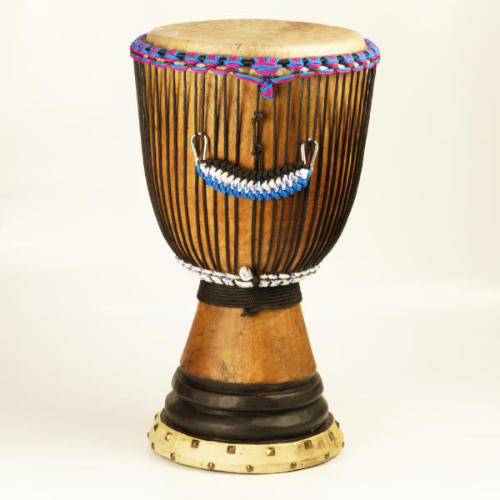

What Kind Of Rope Does a Djembe Have?
While rope is a relatively new addition to this traditional drum, it’s now an essential component.
A Brief History
Back in the day, djembe makers were using rope made from animal hide. Cut into long thin strips, they were often twisted for added strength.
But these days, with the availability of high-quality commercial rope, djembes now use industrially made ropes and cords.
Modern Materials
What are they made of? A variety of materials:
- Nylon: Strong and stretchy, like a pair of 80s leggings
- Polyester: Durable and resistant to shrinking
- Polypropylene: Lightweight, water-resistant, more colours.
Size Matters.
Djembe ropes come in different diameters, typically ranging from 4mm to 6mm.
The larger your drum, the thicker rope you should use. Larger drums are under more tension.
But like guitar strings – it’s got to feel right!
Djembe rope is 4-6mm in diameter.
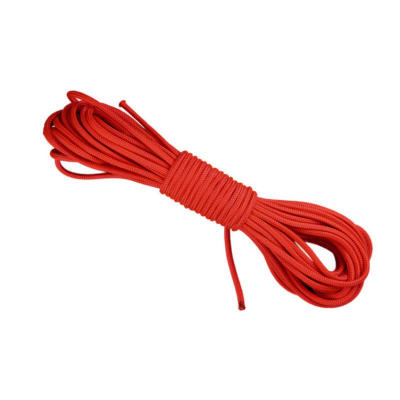

How Many Ropes Does a Djembe Have?
At its core, a djembe uses just three pieces of rope:
1. One for creating loops on the top metal ring - shown in yellow.
2. Another to do the same thing on the bottom ring - shown in green.
3. A third to run between the loops and secure the top ring to the bottom ring - shown in red.
How Does Djembe Rope Work?
Djembe rope is crucial for securing the drumhead and maintaining tension. Here’s how it works:
- The top rope, attached to the ring, is called the crown. This is because is resembles a crown on the drum 'head'.
- You make it by creating a series of knots and loops in the rope, attaching it to the ring.
- The bottom rope is a mirror image of the top crown, with the same number of loops and knots.
- The Go-Between: The vertical rope runs between these loops.
- Tensioning: Pulling on the vertical rope pulls the top crown down, because the bottom crown is fixed. This tightens the skin over the shell and creates the drum's resonating membrane.
- The rope system allows for tuning and adjusting the skin's tension, by tightening and loosening the verticals.

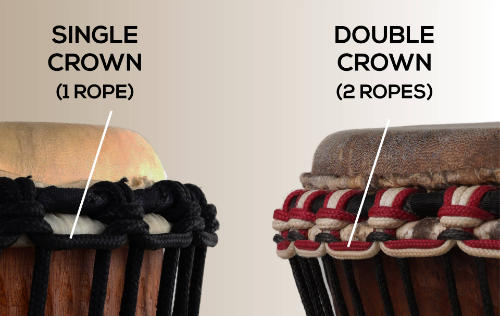
Single Crown vs Double Crown
These days you'll often see larger djembes, with a double rope for the top crown.
This gives the option for adding another colour.
How Long Is Djembe Rope?
We put together this, frankly, stunning visual to help you understand. You lucky thing.

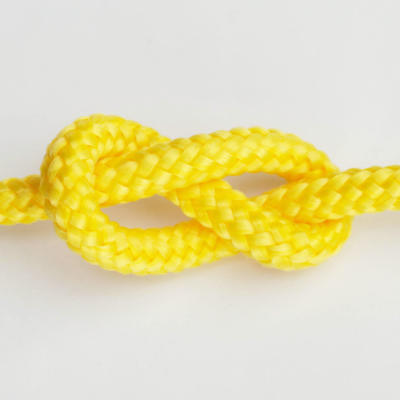
Braided For Strength
Djembe rope comes in all types. But the best rope isn’t just any old string – it’s what’s called braided cord.
Djembe rope is usually braided with 16 braids.
Rope fibers are woven together by a machine, creating a super-strong rope with a high breaking point.
For even more strength, there's an inner core, that strengthens the rope's structure, giving you a tough rope that can take the weight to keep your drum skin tight.
Breaking ROPE
Djembe ropes must be able to withstand high tension, particularly when first stretching the skin over the drum.
The builder pulls the ropes taut by gradually taking more and more slack out of the ropes, and then tying the end off to keep that tension.
The rope is under it's greatest strain at this point.
If the rope breaks while tightening, it can be a time-consuming setback.


Modern Djembe Rope
Commercial rope is often stress-tested in a machine that stretches them until they break.
The weight a rope can withstand before breaking is called the breaking strain.
Your djembe rope could probably tow a small car (but please don’t try that at home)!
Check the specifications: Djembe rope NEEDS A BREAKING STRAIN OF AT LEAST 150-300KG.
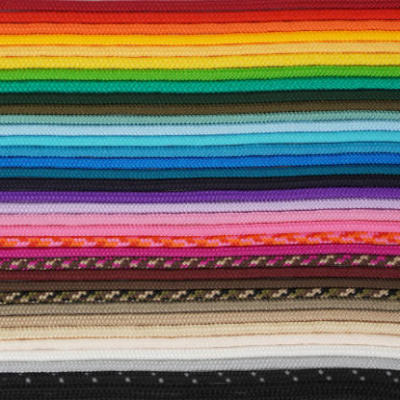
A Rainbow Of Options
90% of djembes on the market today have black ropes. OK, I made that up. But it feels about right. It's the classic djembe look - sleek and timeless. If you want all-black rope, that is a perfectly good choice.
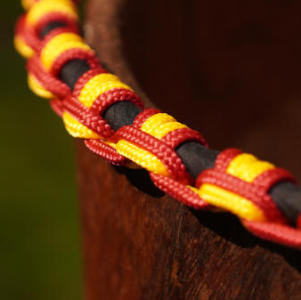
But if you, oh Magellan. want to feel out the edges of creativity, consider using another colour. Or two. Gasp.
These days, modern djembe ropes come in a few more shades.
But if you want a kaleidoscope of shades? Psychedelic purple? You got it. Fancy a fluorescent green? I mean, okaaay!
It’s like choosing paint colours – in fact we've even given our rope cutesy colour names like 'A Giraffe's Fuzzy Bits'. It will either make you laugh or barf.
So there you have it – the lowdown on djembe ropes. Whether you’re a traditionalist or a modern maverick, there’s a rope out there for you.
Whatever you choose, make sure it can handle your epic solos! Boom shaka laka laka.
The djembe rope is part of your drum's personality. What does yours say?