Djembe Care and Maintenance: How to Take Care of Your Djembe
Taking good care of your djembe is an important part of African drumming. A well looked after drum will last longer, sound better and love you back.
What's in This Guide?
- Historical context - Why proper djembe care honors West African drumming traditions
- How To Store A Djembe - How to protect your drum from nasty environmental damage
- Daily care routines - Simple habits for playing the djembe safely
- Tuning techniques - Pro methods to tune your djembe without breaking it
- How to transport a djembe - Safe practices for going to gigs
- Environmental damage - Shield your djembe from temperature and humidity
- Drum head maintenance - Special care for your djembe head and goat skin
- Wood preservation - How to care for and maintain your djembe shell
- Common mistakes - What to avoid when playing the drum (trust us on this!)
- Professional repair guidance - When to get expert help for your djembe
What's NOT covered in this guide:We don't cover complex repair procedures that require specialized tools and expertise, such as:
- How to repair your djembe - Including reskinning, rope replacement, shell crack repair, and hardware restoration djembe-reskinning
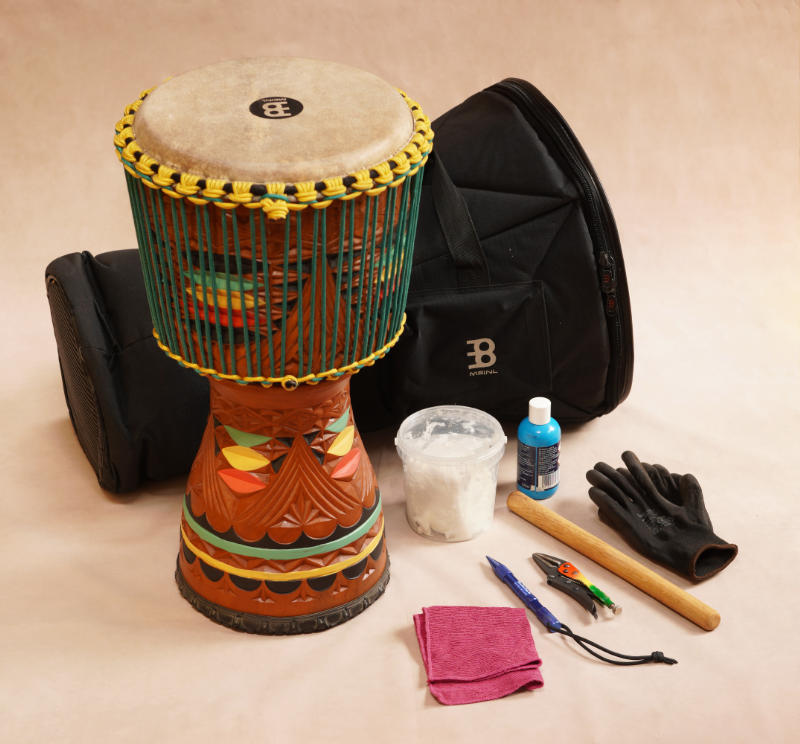
📸 Complete Djembe Care Kit
Everything you need for proper djembe maintenance: cleaning cloths, shea butter, protective case, and essential care tools arranged with a beautiful djembe.
History of the Djembe and Why Does Proper Care Matter?
Very few djembes survive from more than 300 years ago because they're made of wood, goat skin, and rope - materials that naturally break down over time. Most drums will eventually fall apart without proper care, which is why maintenance has always been crucial for keeping these instruments alive.
Master drummers knew that proper care of your djembe was essential not only because the drum needs ongoing attention, but also because the instrument creates this amazing connection between you and the drum. Traditional African djembe makers passed down techniques through generations to make sure each drum would keep serving communities for as long as possible.
Getting to know the history of the djembe helps you understand why care and maintenance matters so much. These drums weren't just instruments—they were vessels for communication, celebration, and cultural preservation.
When you take care of your djembe, you're honoring this rich heritage while making sure your own musical journey keeps going strong.
Modern djembes blend traditional craftsmanship with contemporary materials, but the fundamental principles remain unchanged. Whether your drum features traditional goat skin or modern synthetic materials, the body of the drum requires consistent attention to maintain its integrity and sound quality.
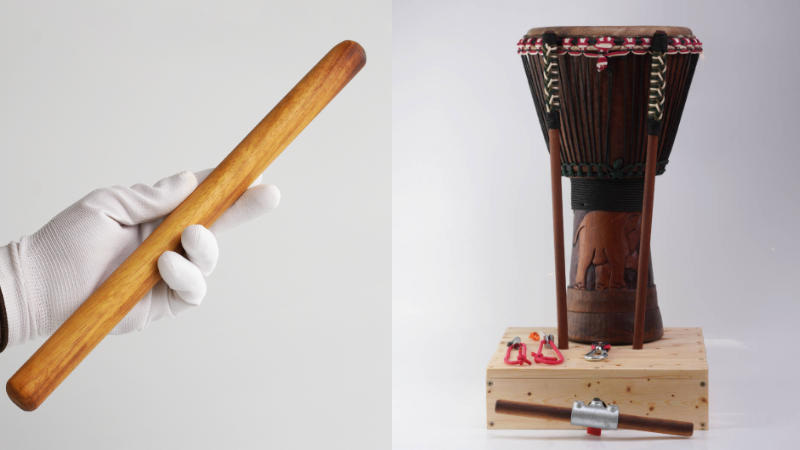
📸 Traditional vs Modern Djembe Care
Comparison of traditional African djembe maintenance methods alongside modern care techniques and tools used today.
How Should You Store Your Drum to Prevent Damage?
Storing your djembe properly is huge for preventing damage and extending the life of the skin. You want to keep it somewhere with stable temperature and humidity levels, protecting both the djembe shell and drum head from environmental stress.
When you store your drum the right way, you'll prevent cracking, warping, and early aging. Professional musicians and drum shops swear by following specific storage rules to keep instruments in great shape.
The best way to handle storing your djembe is putting it on its side in a dry place, away from direct sunlight and heat sources. This position takes pressure off the tension of the drumhead and stops the drum standing upright from developing nasty stress cracks over time.
Never lean stuff against your drum or use it as furniture - that's a sure way to damage the drum for good. Even light items can create pressure points that cause long-term problems.
Climate control really matters for drum preservation. Avoid leaving your drum anywhere with excessive moisture or crazy temperature swings.
A hot car in summer can make the djembe skin crack or the drum shell warp. Similarly, damp basement storage can lead to mold and wood rot that needs expensive professional repair.
⚠️ Storage Warning
Never store your djembe: In attics, basements, garages, or vehicles for extended periods. These environments have extreme temperature and humidity fluctuations that can permanently damage your instrument.
What Are the Essential Daily Care Routines for Playing the Djembe?
Daily care for your djembe begins before you even play your drum. Always remove rings, bracelets, and watches before playing the djembe, as metal jewelry can scratch the drum head or create unwanted sounds.
Keep your hands clean and dry to maintain the longevity of the skin and preserve the natural oils in the goat skin surface. This simple habit prevents contamination and extends the life of your drum head significantly.
After each playing session, wipe down your drum with a clean, dry cloth to remove oils and moisture from your hands. This simple step prevents buildup that can degrade the drum skin over time.
Pay special attention to the areas where your hands make the most contact, as these zones experience the highest wear during African drumming sessions. Regular cleaning after practice helps maintain the drum's responsiveness and tonal quality.
Store the drum on its side when not in use, even between daily practice sessions. This habit reduces constant tension on the drumhead and allows the materials to rest naturally.
If you use a djembe regularly in a drum circle or for extended playing sessions, this rest position becomes even more critical for maintaining the instrument's integrity.
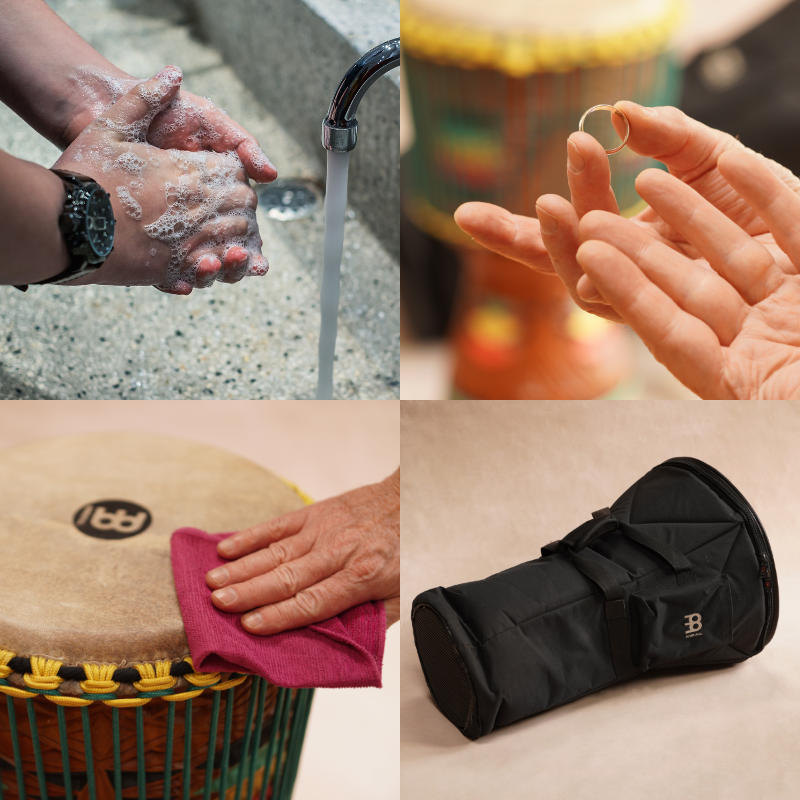
📸 Proper Daily Care Routine
Essential daily care steps: clean hands, removing jewelry, gentle drum cleaning with cloth, and proper storage positioning.
How Do You Tune Your Djembe for Optimal Sound Quality?
Learning to tune your djembe properly is essential for achieving professional sound quality and preventing damage from over-tensioning. The tuning process involves adjusting the rope system that holds the drum head in place, requiring patience and careful attention to maintain even tension around the drum.
Never attempt to tune your djembe dramatically in one session, as sudden changes can cause the drum skin to tear. Professional tuning requires a gradual approach that respects the natural properties of the materials.
Begin tuning by checking the current tension of the drumhead with gentle finger pressure. A properly tuned djembe should have firm resistance without feeling rigid or overly tight.
Work around the drum systematically, making small adjustments to each rope section until you achieve consistent tension and the desired pitch for your African drumming style.
Professional drummers recommend tuning your djembe gradually over several sessions, especially when installing a new skin or making significant pitch changes. This approach allows the goat skin to adjust naturally to increased tension without developing stress points that could lead to cracking.
Keep your drum in a stable environment during the tuning process to prevent temperature and humidity fluctuations from affecting your adjustments. Consistent environmental conditions help maintain tuning stability between sessions.
💡 Professional Tuning Tip
Tune your djembe in the same environment where you'll be playing. Temperature and humidity changes can significantly affect drum tension and pitch.
What Should You Know About Transporting the Drum Safely?
Transporting your drum requires careful planning and proper equipment to prevent damage during travel. Invest in a bag specifically designed for djembes, featuring adequate padding around the drum head and protection for the djembe shell.
A quality drum bag serves as your first line of defense against impacts, temperature changes, and moisture exposure during transport. Professional musicians never travel without proper protection for their instruments.
When transporting the drum, avoid leaving your drum in vehicles for extended period of time, particularly in extreme weather conditions. Temperature fluctuations can cause the drum head to expand and contract, potentially leading to cracking or detuning.
Plan your travel schedule to minimize the time your beautiful djembe spends in uncontrolled environments. Even short stops in hot vehicles can cause immediate damage to sensitive materials.
Professional musicians who regularly transport their instruments recommend loosening the drum tension slightly before long trips. This precaution reduces stress on the drum head during transport and prevents damage from vibrations or impacts.
Remember to retune your djembe after reaching your destination and allowing it to acclimate to the new environment. This adjustment period typically takes 15-30 minutes in stable conditions.
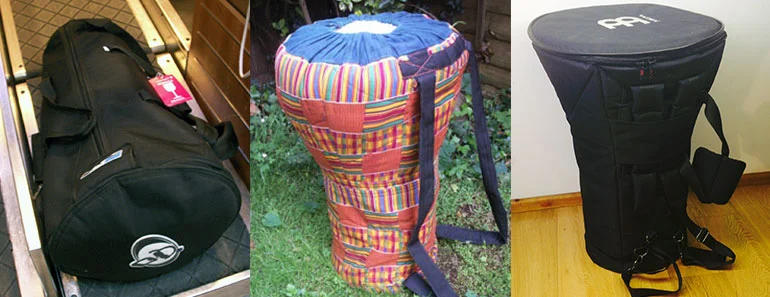
📸 Safe Transport Setup
Professional djembe transport solutions including padded cases and travel bags designed for safe vehicle and airline travel.
How Can You Protect Your Djembe from Environmental Damage?
Environmental protection is crucial for maintaining your djembe's structural integrity and sound quality. Temperature and humidity fluctuations pose the greatest threats to drum longevity, causing wood expansion, skin cracking, and rope deterioration.
Understanding these environmental factors helps you make informed decisions about drum placement and storage. Professional conservators use these same principles to preserve museum-quality instruments.
Direct sunlight can fade the drum finish, dry out the drum skin, and cause uneven heating that leads to cracking. Position your drum away from direct sunlight, heating vents, and air conditioning units that create rapid temperature changes.
Consistent environmental conditions help ensure the drum maintains its tuning stability and prevents premature aging of materials. Monitor your storage area for dramatic temperature swings or humidity changes.
Humidity control becomes particularly important in regions with extreme seasonal variations. Use a small amount of shea butter or coconut oil or shea butter on the djembe shell to prevent excessive drying, but never apply these treatments to the drum head itself.
The skin on your djembe drum requires its natural texture to produce proper tone and response. Any foreign substances on the playing surface can alter the instrument's acoustic properties significantly.
🌡️ Ideal Storage Conditions
Temperature: 65-75°F (18-24°C)
Humidity: 40-50% relative humidity
Location: Interior room, away from windows and HVAC vents
What Maintenance Does the Djembe Head Require?
The djembe head represents the most delicate and crucial component of your instrument, requiring specialized care to maintain optimal performance. Regular inspection of the drum head helps identify potential problems before they become serious damage requiring professional repair.
Look for thin spots, small cracks, or areas where the skin appears stretched or discolored. Early detection allows for preventive measures that can extend the longevity of the skin significantly.
Clean the djembe head gently with a barely damp cloth when necessary, but avoid using soaps, oils, or cleaning products that could alter the skin's natural properties. The drum head should maintain its natural texture and flexibility to produce the full range of tones essential for West African drumming techniques.
Excessive cleaning can remove natural oils that keep the skin supple and responsive. Professional drum makers recommend minimal intervention with the playing surface.
Monitor the tension of the drumhead regularly, as environmental changes cause natural expansion and contraction. A properly maintained drum head should feel firm but responsive, allowing for clear bass tones at the center and crisp slap sounds near the edges.
If you notice significant changes in sound quality or response, consult a professional for evaluation. Early intervention can often prevent the need for complete drum head replacement.
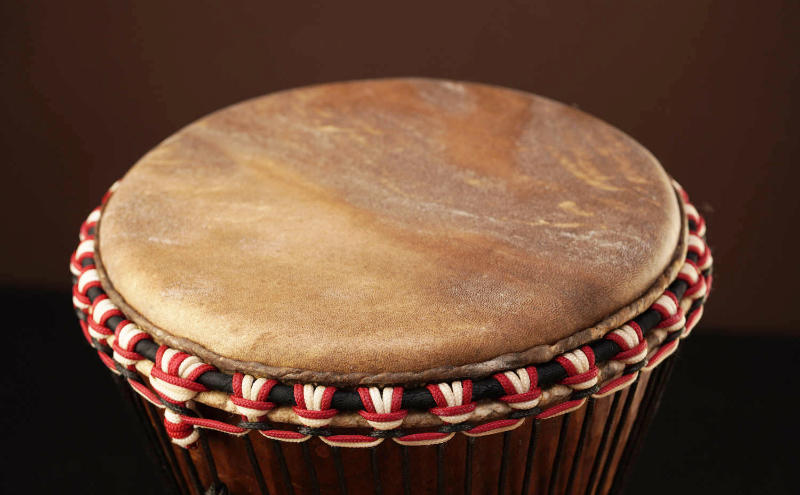
📸 Drum Head Inspection
How to properly inspect your djembe head: identifying healthy skin characteristics and warning signs of wear, tear, and potential damage.
How Do You Care for and Maintain the Djembe Shell?
The djembe shell requires regular attention to prevent cracking, maintain structural integrity, and preserve the instrument's aesthetic appeal. Wood is a living material that continues to respond to environmental conditions throughout the drum's life, making consistent care essential for long-term durability.
Regular maintenance prevents minor issues from developing into major problems requiring extensive repair. Professional drum builders emphasize the importance of preventive shell care.
Inspect the drum shell monthly for signs of stress, including small cracks, loose joints, or changes in wood color that might indicate moisture damage. Clean the shell with a dry cloth to remove dust and debris, paying particular attention to carved areas where dirt can accumulate.
Never use water or chemical cleaners directly on the wood surface. These substances can penetrate the grain and cause swelling, warping, or finish deterioration.
Apply a small amount of shea butter or specialized wood conditioner to the djembe shell every few months, working it into the wood grain with circular motions. This treatment helps maintain the wood's natural flexibility and prevents excessive drying that can lead to cracking.
Focus on areas that receive the most handling, as hand oils can gradually dry out the wood around the drum. Regular conditioning maintains the shell's structural integrity and aesthetic appearance.
🧴 Recommended Shell Treatments
Natural options: Pure shea butter, carnauba wax, linseed oil
Frequency: Every 2-3 months or as needed
Avoid: Petroleum-based products, silicone sprays, furniture polish
What Common Mistakes Should You Avoid When Playing the Drum?
Many drummers unknowingly damage the drum through common playing the drum mistakes that seem harmless but cause cumulative damage over time. Playing with jewelry represents one of the most frequent causes of drum head damage, as rings and bracelets can scratch or puncture the delicate goat skin surface.
Always remove all jewelry before you play your djembe to protect both the instrument and your hands. This includes watches, which can strike the rim during energetic playing sessions.
Never use drum sticks or mallets on your djembe, as these tools can puncture the drum head or create dents in the djembe shell. Djembes are designed specifically for hand playing, and the techniques developed over centuries of African drumming tradition rely on the subtle control possible only with bare hands.
Using inappropriate tools can damage the drum permanently and destroy its authentic sound. Learn proper hand techniques to achieve the full range of djembe sounds safely.
Avoid playing your drum on hard surfaces without proper protection, as vibrations can stress the drum shell and affect the instrument's structural integrity. Use a drum pad or cushion to protect the bottom of the djembe when playing on concrete, tile, or other hard flooring.
This simple precaution helps maintain the drum's integrity and prevents damage from repeated impacts against unforgiving surfaces.
❌ Never Do These Things
• Play with rings, watches, or bracelets
• Use drumsticks or mallets
• Place drinks or objects on the drum head
• Play on concrete without protection
• Heat the drum with hair dryers or heaters
When Should You Seek Professional Drum Repair Services?
Professional repair becomes necessary when damage exceeds the scope of routine maintenance or when specialized skills are required to restore your instrument properly. Signs that indicate the need for professional attention include significant cracking in the drum shell, tears in the drum head, loose or damaged hardware, or dramatic changes in sound quality that don't respond to tuning adjustments.
Attempting complex repairs without proper experience can damage the drum further and reduce its value significantly. Professional technicians possess the specialized tools, materials, and knowledge necessary to restore your djembe to optimal playing condition.
They can also provide valuable advice about preventing future problems and maintaining your specific instrument type. Expert repair services understand both the technical and cultural aspects of djembe restoration.
When selecting a drum shop or repair service, look for technicians with specific experience in African drumming instruments and traditional repair techniques. The best professionals understand both the cultural significance of these instruments and the technical requirements for proper restoration.
A good repair service can often prevent minor issues from becoming major problems through regular maintenance programs. Many shops offer consultation services to help you develop appropriate care routines for your specific instrument.
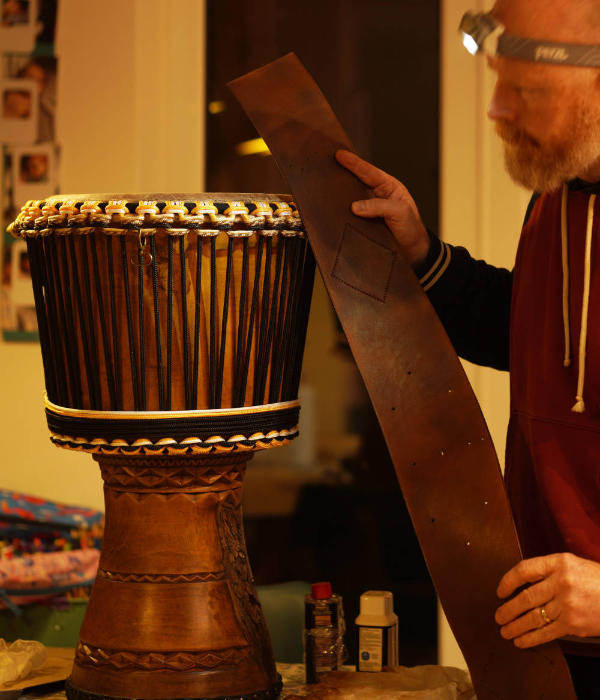
📸 Professional Repair Workshop
Inside our professional djembe repair workshop: Al working on drum restoration with specialized tools, replacement skins, and repair work in progress.
Additional Resources for Djembe Care
Learning Proper Technique
Proper playing technique is the foundation of drum longevity. Start with basic lessons and progress through structured learning to develop habits that protect your instrument.
Troubleshooting Common Issues
- Sore hands from playing
- Traveling with your djembe
- Understanding djembe symbols
Equipment and Accessories
- Choosing the right djembe
- Protective cases and bags
- Stands and accessories
External Resources
- Museum conservation techniques - Smithsonian Institution
- Wood preservation methods - Forest Products Laboratory
- Traditional African instrument care - Britannica Music Reference
Essential Djembe Care and Maintenance Summary
- Store your drum on its side in a dry place away from direct sunlight and extreme temperatures
- Remove all jewelry before playing the djembe to prevent scratching the drum head
- Invest in a bag with proper padding for safe transport and storage protection
- Tune your djembe gradually over multiple sessions to prevent stress on the drum skin
- Clean the drum shell regularly with dry cloths and condition with shea butter monthly
- Inspect the drum head frequently for signs of wear, thinning, or small cracks
- Avoid leaving your drum in hot cars or areas with excessive moisture for extended periods of time
- Never use drum sticks or mallets on your djembe as they can damage the goat skin
- Keep your drum in stable environmental conditions to maintain tuning and prevent cracking
- Seek professional repair for significant damage or when sound quality deteriorates
- Play your drum regularly to maintain skin flexibility and prevent material degradation
- Protect your djembe with proper positioning during storage and transport to ensure the drum longevity
For professional djembe repair services, reskinning, or custom drum work, visit our repair services page or contact us directly. We're here to help keep your djembe playing perfectly for years to come.