Djembe Pronunciation: How to Pronounce Djembe In English (Complete Dictionary Guide)
Djembe pronunciation is something people can get wrong at first, but it's worth mastering if you're into the amazing West African drum.
Whether you're just starting out with percussion, love world music, or are curious about different cultures, learning how to pronounce djembe properly shows you respect its incredible heritage.
This guide breaks down everything you need to know about djembe pronunciation - from simple phonetic tips to the cool history behind the name. Plus you'll pick up some cool facts about this traditional drum along the way.
Quick Answer: Djembe is pronounced "JEM-beh" with a silent 'd' and emphasis on the first syllable.
How Do You Pronounce Djembe? The Correct English Pronunciation
The correct djembe pronunciation in English is /'ʒɛmbə/ or /'ʒɛmbeɪ/, but here's the key thing you need to know: the 'd' is completely silent.
Here's an audio recording:
🔊 Listen to the Correct Pronunciation
Want to hear exactly how "djembe" should sound? Click the audio player below to listen to the proper pronunciation:
Notice how the 'd' is completely silent and the emphasis falls clearly on "JEM-beh".
When you say djembe, it comes out as 'JEM-beh' - where "Jem" sounds like "gem" (the precious stone) and "beh" is like you're about to say "bed" but stop after the first sound.
Put the emphasis on that first syllable, which is typical for African languages.
It flows smoothly without any hard consonant at the start. Instead, you get this nice soft "zh" sound (think of the 's' in "treasure") that glides right into the main part of the word. Once you nail this, the djembe pronunciation becomes way easier.
The good news is that major dictionaries like Oxford have standardized the English pronunciation of djembe, and they all agree on that silent 'd' rule. So you're not learning some obscure pronunciation - this is the accepted way to pronounce djembe in English, and it works whether you're in London, New York, or anywhere else English is spoken.
French vs English Pronunciation
The drum has expanded out of the African setting where it originally came from into European and American communities.
We can learn much from the masters of djembe on how to say the instrument's name, however, most master djembe players are from former French colonies, and can speak French as a second language, with English a distant third.
'DJEMBE' OR 'ZHEMBE'?
In French, the word is said with a soft "zh" sound (like "treasure"), so it's zhem-beh. Whereas, in English, the start is slightly harder 'j' sound, jem-beh.
Either is fine.
What Does Djembe Mean? Understanding the Word's Definition and Meaning
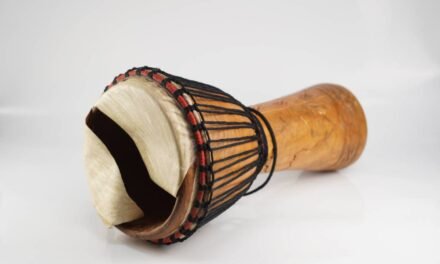
The djembe is defined as a goblet-shaped drum from West Africa, traditionally carved from a single piece of wood and covered with animal skin. This definition appears consistently across English dictionary sources, establishing the djembe as one of Africa's most recognizable traditional instruments.
The word itself carries deep cultural meaning beyond its simple definition as a musical instrument.
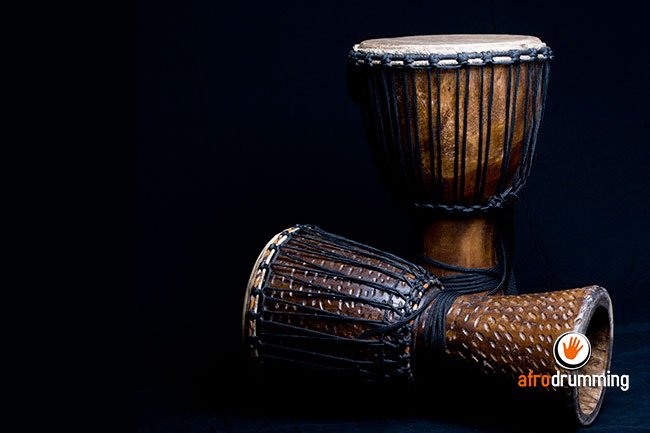
Understanding what djembe means requires exploring its cultural significance in West African societies. The drum serves not just as an instrument but as a tool for communication, ceremony, and community gathering.
This broader meaning enriches the word's definition and explains why correct djembe pronunciation matters - it's about respecting a sacred cultural tradition.
The djembe drum's meaning extends to its role in preserving African heritage and tradition. When musicians learn proper djembe pronunciation, they're connecting with centuries of cultural practice.
The word encompasses not just the physical instrument but the entire tradition of djembefola (djembe players) who carry forward this ancient art form.
Fun Fact: A djembefola is a master djembe player who has spent years learning traditional rhythms and techniques.
Where Does the Word Djembe Come From? Djembe History and Etymology
The etymology of djembe gives us some fascinating insights into West African language and cultural history. We've heard a few theories about the word's origins, most of which are folklore rather than historical. But each gives us a different perspective on djembe history.
The most widely accepted explanations come from the Bambara and Malinke languages of Mali and the surrounding regions.

WHAT DOES DJEMBE MEAN?
According to master djembefola Abdoul Doumbia from Ségou in Mali, the word 'jembe' derives from two Bambara words: 'Dièn' meaning unity and 'Bin' signifying harmony.
This etymology connects the djembe's pronunciation to its fundamental purpose of bringing people together through rhythm and sound.
Another theory suggests the word comes from the Bambara phrase "Anke djé, anke bé," meaning "everyone gather together in peace."
A third explanation for djembe history involves the drum's physical construction. Traditional testimony indicates the word combines 'Djem' (referring to the dense wood from Mali used to make the drum shell) and 'be' (pronounced 'beh,' meaning goat in reference to the animal skin covering).

Map of West Africa showing Mali, Guinea, and surrounding regions where djembes originated
Why Is the 'D' Silent in Djembe Pronunciation?
The silent 'd' in djembe pronunciation might seem odd to many English speakers, but this linguistic quirk hints at the intersection of African languages and French colonial influence.
The 'dj' spelling doesn't represent an English "d" sound but rather approximates a sound that doesn't exist in English - the soft "zh" consonant found in African languages.
French linguists and ethnomusicologists who studied West African drumming used the 'dj' combination to represent this unfamiliar sound in their written records. Since French doesn't have the exact phoneme either, this spelling became a compromise that helped standardize djembe pronunciation in European languages.
The 'd' serves as a visual cue that modifies the 'j' sound rather than being pronounced separately.
This spelling convention explains why djembe pronunciation requires ignoring the 'd' entirely. Native speakers of West African languages naturally produce the correct sound without thinking about the 'd,' but English speakers must consciously learn to bypass it.
Modern pronunciation guides emphasize this point to help learners avoid the common mistake of adding an unwanted consonant to the word.
Language Tip: The 'dj' combination in djembe works like the 'gn' in "gnocchi" - you don't pronounce both letters separately.
Common Djembe Pronunciation Mistakes and How to Avoid Them
Let's be honest - pretty much everyone gets djembe pronunciation wrong at first! The biggest mistake is trying to pronounce that sneaky 'd' at the beginning, which makes it sound like "d-jem-beh" or even worse, "d-jem-bee."
But here's the thing - that 'd' is completely silent, so just pretend it's not there at all.
Another super common error is saying "jem-BEE" instead of "jem-BEH."
It ends with a soft "beh" sound, like you're starting to say "bed" but stopping halfway through.
The emphasis thing trips people up too. English speakers often want to stress the second syllable ("jem-BEH"), but it should actually be "JEM-beh" with the punch on the first part.
Think of it like saying "GEMstone" but replacing "stone" with "beh." Once you get this rhythm down, the djembe pronunciation starts feeling much more natural.
Common Mistakes Checklist:
❌ "d-jem-bee"
❌ "jem-BEE" (wrong ending)
❌ "jem-BEH" (wrong emphasis)
✅ "JEM-beh" (perfect!)
Djembe Spelling Variations: From Jembe to Yembe
The various spelling variations of djembe reflect the word's journey from oral tradition to written form across different languages and cultural contexts.
Common alternatives include jembe, dyìnbe, djimbe, guiembe, jimbe, and yembe, each representing different attempts to capture the African pronunciation in written form.
The most widely used spelling, "djembe," comes from French colonial documentation of West African music and culture. French scholars used this spelling to approximate the sound for European readers, and it became standardized through academic and commercial use.
However, some modern practitioners argue for dropping the French spelling in favor of "jembe," which they consider closer to the original African sound.
In the Malinke language, the word appears as "dyìnbe" because the traditional writing system lacks the letter "j." These spelling variations don't change the fundamental djembe pronunciation, but they demonstrate how the word has adapted to different linguistic systems while maintaining its essential sound and meaning.
If you're interested in learning more about djembe history and cultural background, you'll find these spelling variations make more sense in their historical context.
Audio Resources and Tips for Learning Djembe Pronunciation
Audio pronunciation resources provide the most effective way to master djembe pronunciation, allowing learners to hear the correct sound repeatedly until it becomes natural.
Online dictionaries, including Oxford's Advanced Learner's Dictionary, offer audio clips that demonstrate proper pronunciation with native English speaker guidance.
Listening to West African djembefola speak about their instruments offers authentic pronunciation examples that connect the word to its cultural context. These audio resources often include variations in accent and emphasis that help learners understand the acceptable range of djembe pronunciation while maintaining accuracy.
Record yourself practicing djembe pronunciation and comparing it to audio resources to identify areas for improvement. This self-assessment technique helps develop muscle memory for the correct mouth position and emphasis pattern.
Regular practice with audio feedback accelerates the learning process and builds confidence in using the word correctly.
For those serious about learning djembe, check out our comprehensive guide on how to play djembe for beginners where proper pronunciation is just the first step!
Practice Tip: Try saying "gem" + "beh" slowly, then speed it up until it flows naturally as "JEM-beh."
The Cultural Importance of Correct Djembe Pronunciation
Proper djembe pronunciation demonstrates respect for West African culture and the traditional communities that created this magnificent instrument.
When musicians, students, and enthusiasts make the effort to learn correct pronunciation, they honor the djembefola who preserve this ancient tradition and acknowledge the drum's sacred cultural significance.
Cultural sensitivity in djembe pronunciation extends beyond mere accuracy - it reflects an understanding that this isn't just a musical instrument but a vessel for African heritage, spirituality, and community connection.
The word carries the weight of centuries of tradition, and pronouncing it correctly shows appreciation for that cultural depth.
Educational institutions and music programs increasingly emphasize proper djembe pronunciation as part of cultural competency training. This approach helps students understand that learning about world music involves respecting the cultures that created these traditions, starting with something as fundamental as saying the instrument's name correctly.
When you're ready to dive deeper into djembe culture, explore our collection of articles about African drumming traditions and the masters who keep these traditions alive.
Master's Voice:
According to legendary djembefola Famoudou Konaté, the djembe's origins trace back to the Malinke people, who developed the instrument from kitchen pestles called "kolon kalan."

Famoudou Konate. Photo by Tim Bray.
Djembe in Modern English Usage and Dictionary Evolution
Modern English dictionaries have adapted to include djembe pronunciation guides as the instrument gained popularity worldwide.
The Oxford English Dictionary and other major references now provide standardized pronunciation notation, audio guides, and cultural context for the word, reflecting its integration into English vocabulary.
The evolution of djembe in English usage demonstrates how world music has enriched the language with new terminology and concepts. Music educators, percussionists, and cultural enthusiasts have driven demand for accurate pronunciation resources, leading to better dictionary coverage and educational materials.
Contemporary usage of djembe in English maintains the traditional pronunciation while adapting to various regional accents and speaking patterns. This flexibility allows the word to remain accessible to diverse English speakers while preserving its essential phonetic character and cultural authenticity.
Dictionary Fact: Major English dictionaries added "djembe" entries in the late 20th century as world music gained mainstream popularity.
Learning Resources: Where to Find Djembe Help
- Watch online video tutorials and podcasts from djembe masters to hear authentic pronunciation examples in natural conversation contexts. These resources allow learners to hear the word used naturally while discussing technique, history, and cultural practices, reinforcing correct pronunciation through repetition and context.
If you're looking to buy your first djembe, our djembe buying guide will help you choose the right instrument while learning proper terminology. For maintenance tips once you have your drum, check out our guide on djembe care.
Key Points to Remember About Djembe Pronunciation:
• The 'd' is always silent - pronounce it as "JEM-beh," not "d-jem-beh"
• Emphasis falls on the first syllable - "JEM-beh," not "jem-BEH"
• The 'J' sound is soft - like the 's' in "measure," not a hard English 'j'
• Phonetic spelling is /'ʒɛmbə/ - use this as your pronunciation guide
• Multiple spelling variations exist - djembe, jembe, jimbe are all acceptable
• French colonial influence created the 'dj' spelling convention
• Cultural respect matters - correct pronunciation honors West African tradition
• Audio resources are essential - listening beats reading for pronunciation learning
• The word means "gather in peace" according to traditional Bambara etymology
• Dictionary sources confirm the standard English pronunciation across major references